Marinship.
1942 to 1946
The northern waterfront as it exists today was made in the spring of 1942.
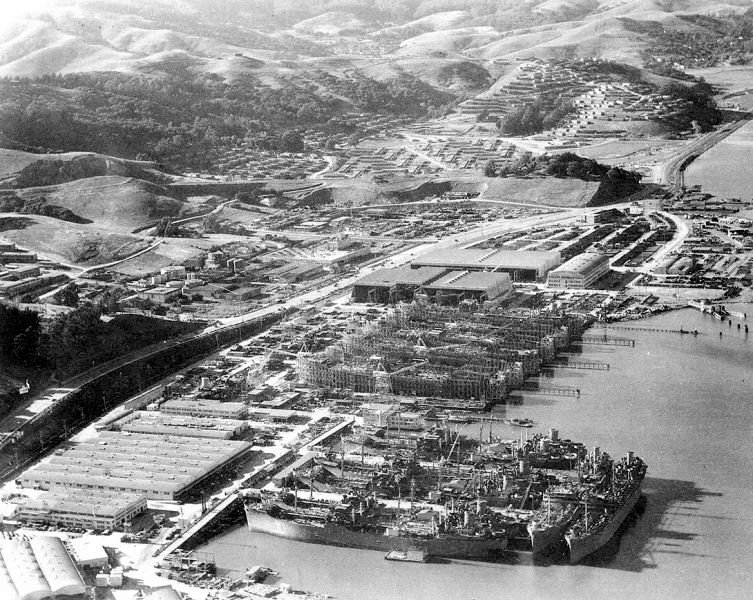
Three months after Pearl Harbor the U.S. Maritime Commission asked the W. A. Bechtel Company to build an emergency shipyard on the Bay. The telegram is dated March 2, 1942, and by the Historical Society’s account Bechtel answered with a proposal within twenty-four hours. The site chosen was the Northwestern Pacific Railroad’s repair yard on the shore north of town, idle since rail and ferry service ended in 1941.
A neighborhood stood in the way. Pine Point was a wooded knoll with some forty homes, and its residents were given about thirty days to leave. The hill was then cut down and pushed into the Bay as fill. Some 26,000 piles were driven, and a channel 300 feet wide and a mile and a half long was dredged out of Richardson Bay, moving about three million cubic yards of mud. About 2,000 workers built the yard around the clock, and the finished plant covered 210 acres. The Sausalito post office stands on that fill today.
The first keel was laid on June 27, less than four months after the telegram.
The ships.
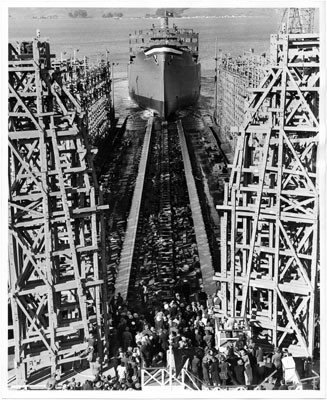
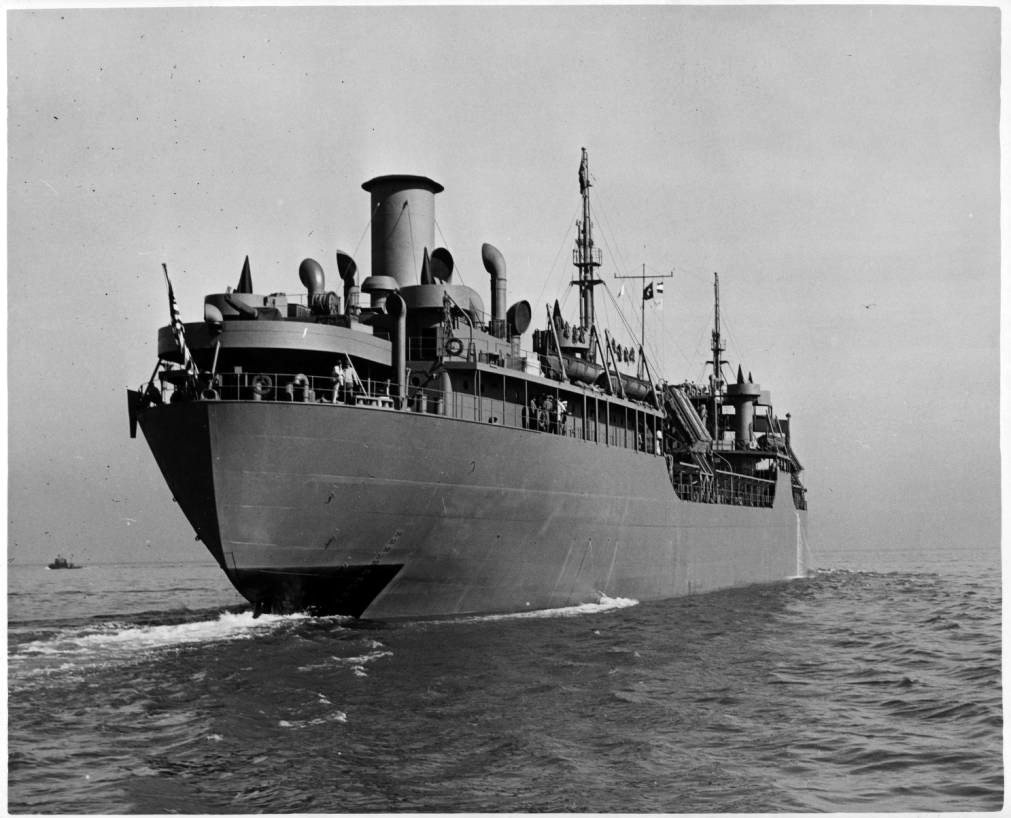
Marinship began with Liberty ships, the standard EC-2 cargo vessel of the emergency program, and built fifteen of them, starting with the William A. Richardson. In the fall of 1942 the yard switched to tankers and fleet oilers. The launch of the Escambia was reported as the first big ocean-going tanker launched on San Francisco Bay in twenty-one years. The Mission Purisima, which ran her trials on November 5, 1943, was the first tanker fully completed at the yard.
By the end the yard was delivering a tanker about every ten days. Early in 1945 it built the Ellwood Hills in 59 days. The Huntington Hills, launched on June 16, 1945, took 33 days, 28 on the ways and 5 fitting out.
The usual total is 93 ships: 15 Liberty ships, 16 fleet oilers and 62 tankers. The yard also built 20 invasion barges for the Army late in the war, fitted out three British coasters and repaired twenty battle-damaged vessels.
The people.
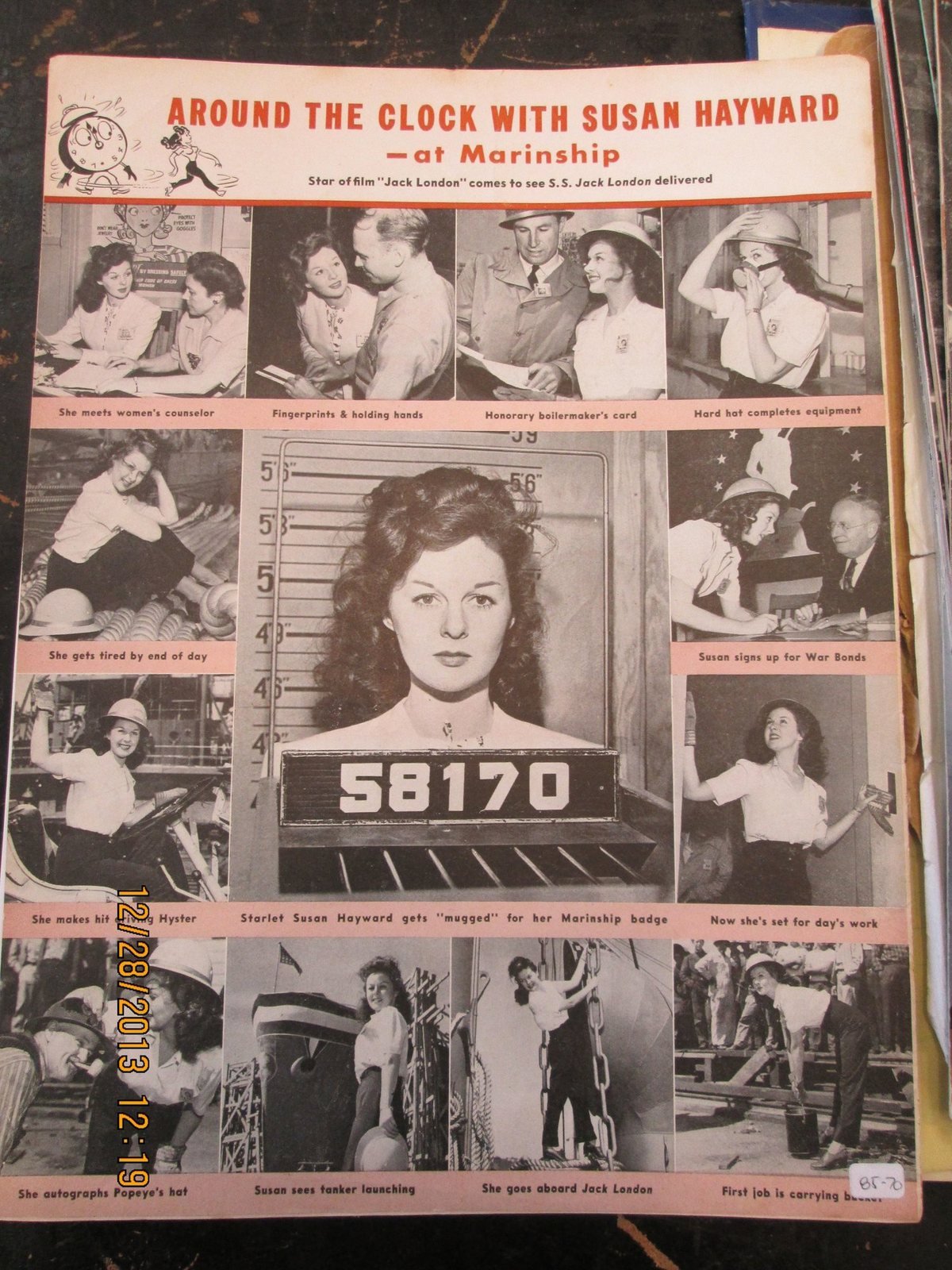
About 20,000 people worked at Marinship at its peak. They were hired through a hall on Caledonia Street, and the yard published its own paper, The Marin-er, which among other things recorded the celebrities who visited.
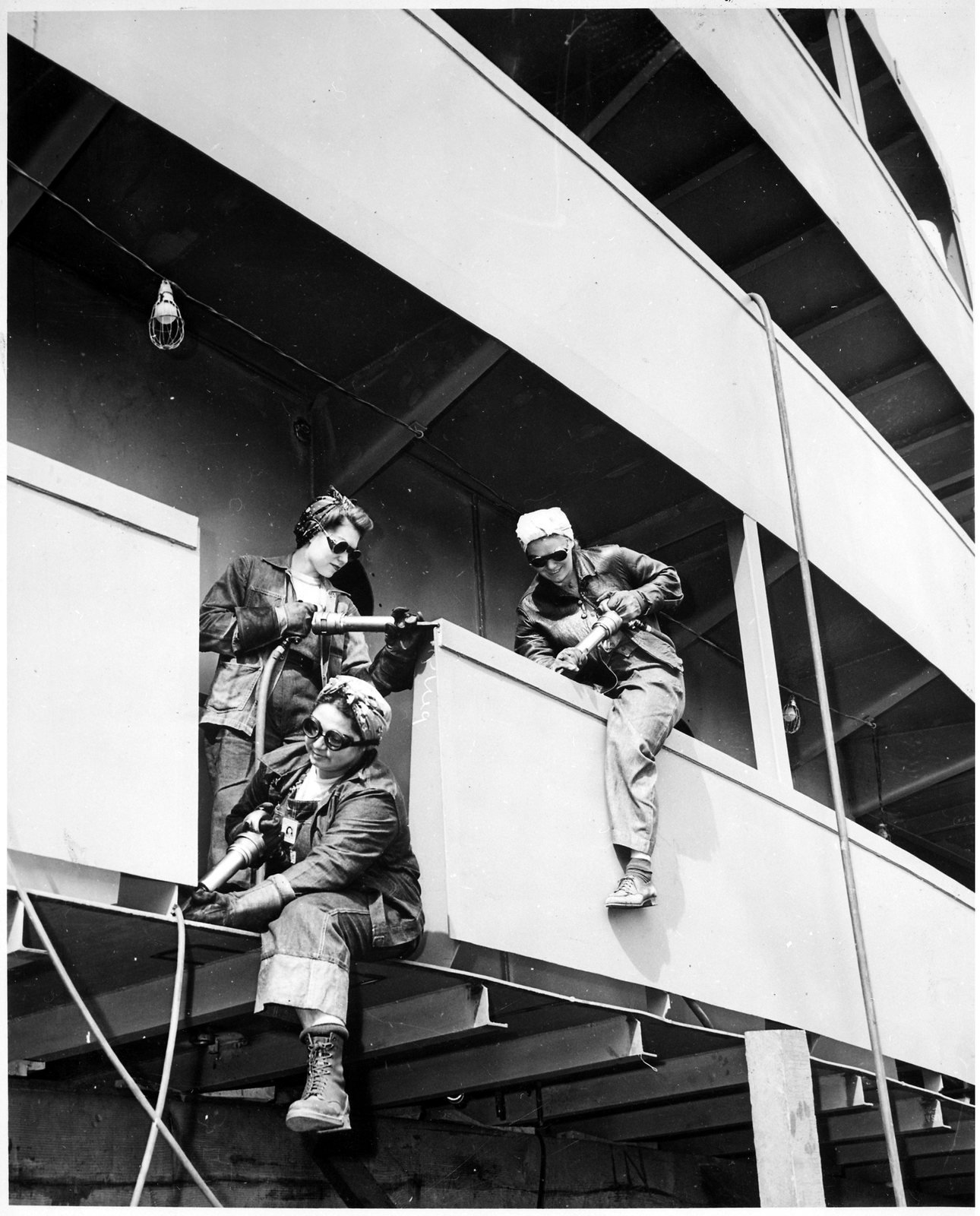
Women entered the yard within days of the first keel. Dorothy Gimblett became the first woman yard worker on July 7, 1942, and by 1943 women were more than a fifth of the workforce. Housing for 6,000 workers was built next to the yard and named Marin City. Black workers came to Marinship from across the country. When the war ended the shipyard jobs disappeared, and Black employment collapsed. Marin City outlasted the yard and is still a community.
James v. Marinship.
The skilled trades at Marinship worked under a closed-shop agreement with the Boilermakers’ union, which would not admit Black workers as full members and placed them in a separate auxiliary lodge. In 1943 Joseph James, a Black welder at the yard, and many others refused to pay dues to the auxiliary, and the union moved to have them dismissed. James sued. Thurgood Marshall, then counsel for the NAACP, argued the case before the California Supreme Court, which ruled in 1944 that a union holding a closed shop could not also keep a closed membership.
The end of the yard.
The last launch, of the tanker Mission San Francisco, was on September 8, 1945, and the last deliveries followed that month. The Army Corps of Engineers took over the yard at midnight on May 16, 1946, as a base for its reconstruction work in the Pacific islands. By 1950 the dismantling was well advanced. What happened to the land is the subject of the next chapter.