After Marinship.
1946 to 1984
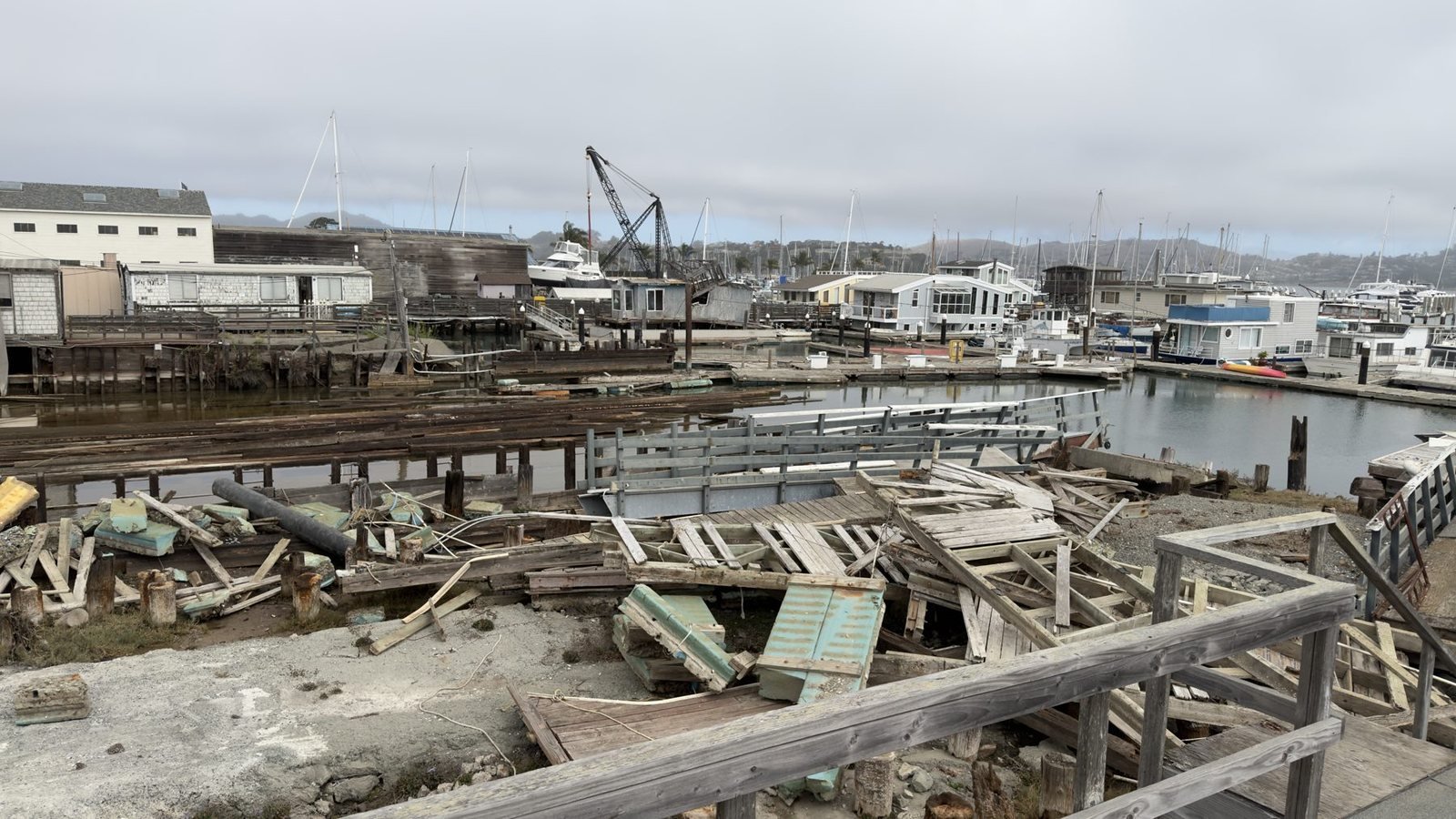
Marinship left 210 acres of level, filled land beside a dredged channel, with slipways, buildings, surplus barges and hulls.
Three things happened to it. The Army Corps of Engineers kept a part, private buyers took other parts over the following years, and Donlon Arques bought a section of the waterfront almost at once.
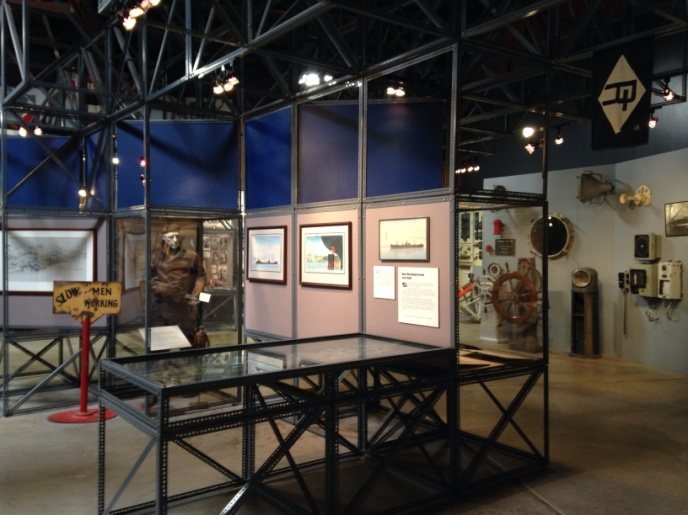
The Corps is still there. In the late 1940s John Reber promoted a plan to dam San Francisco Bay, and Congress authorized a hydraulic model to test it. The Bay Model was completed in 1957 at 2100 Bridgeway: 286 concrete slabs covering about two acres, at a scale of 1 to 1,000 across and 1 to 100 in depth. Its tests showed that the Reber Plan would not work. The Historical Society’s Marinship exhibit is housed in the building, and the Corps pier beside it is still in use. Two Marinship buildings survive on Gate Five Road and Libertyship Way, and the districts called Gate 3, Gate 5 and Gate 6 still carry the yard’s gate numbers.
Don Arques.
Don Arques spent the war on Navy contracts, at Marinship and at Terminal Island in San Pedro. In 1947 he bought 22.8 acres of the former shipyard’s waterfront, with three skidways and one slipway, land then thought “essentially worthless.” This was the Gate 3 parcel. Waldo Point Harbor, on the tract his father had taken for a barge debt, lies to the north. Over the following years he acquired surplus ships and shipyard equipment and came to control much of the postwar Marinship waterfront. County officials, according to the Wall Street Journal, called him “the Howard Hughes of Sausalito.”
His business was scrap and salvage, and it was slow. He held his land cheaply and spent little on it, a habit Annie Hallett called “benign neglect.”
The houseboat waterfront.
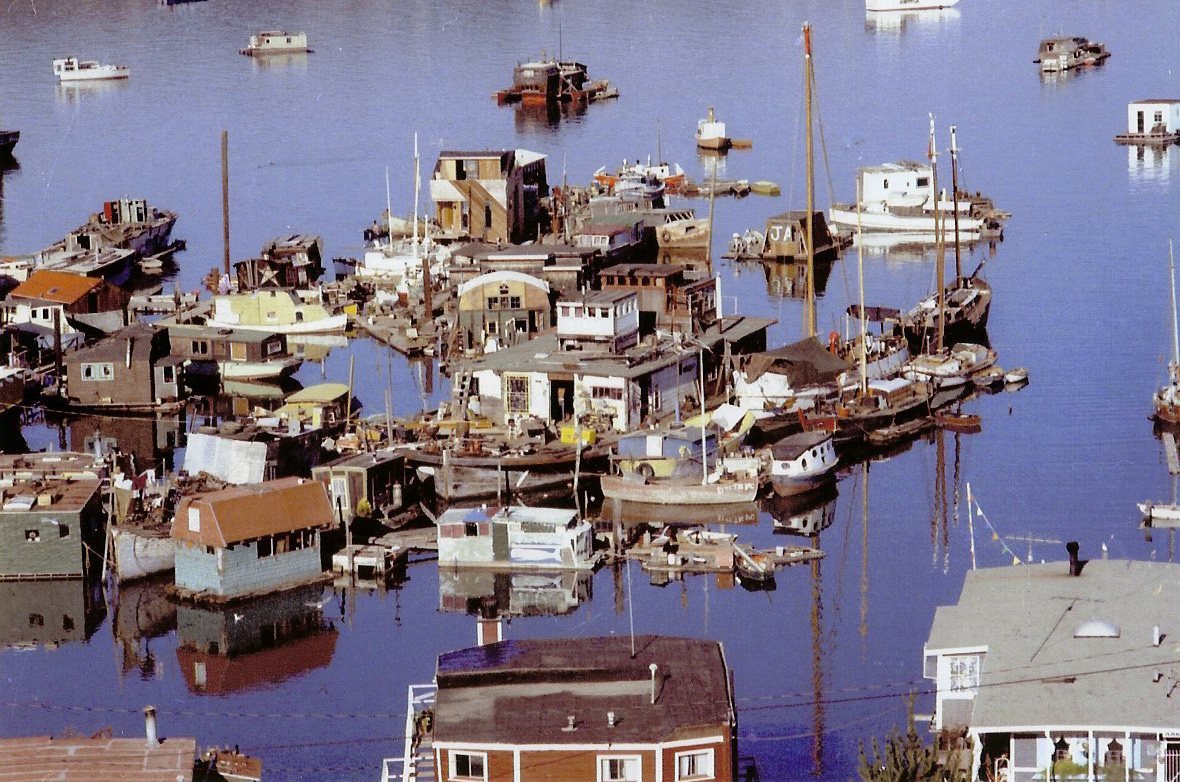
Arques rented or simply lent hulls and ground to people who had little money. Veterans on the GI Bill took surplus Marinship barges and hulls and turned them into homes on his property. Artists and craftsmen followed. The retired ferries City of San Rafael, Vallejo, Charles Van Damme, Issaquah and City of Seattle, parked on the flats, became the nucleus of the houseboat community of the 1960s, built from what the shipyard and the old Bay fleet had left: barges, tugs, landing craft, net buoys and ferry boilers. In 1971 there were confrontations between houseboat residents and County police, and after years of legal fights the docks came under the Waldo Point Harbor corporation.
Gate 3.
Gate 3 stayed a shipyard through all this. In the 1960s it built houseboat hulls, some in concrete. Lindsay Cage worked for Don for decades. In the 1970s Don sponsored a boatbuilders’ co-operative on the site, whose members paid $65 a month for space, and by the early 1980s there were more than twenty of them. Wayne Bishop built the fishing boat Santa Lucia there, and Bob Darr, who later founded the Arques School, was a member. In 1978 Marin Scope called Gate 3 “an unrepentant vestige of the funky post-World War II Marinship.” By 1983 the place housed 42 families, a free store, gardens and the boat co-op.
It ended the following year. In the spring of 1984 Marina Plaza opened next door and its owner sought the eviction of the Gate 3 residents. Supporters, among them Phil Frank, later the historian of the houseboats, marched in protest that June. The evictions went ahead, and the residents moved to Gate 6 or to Galilee Harbor. Nothing new was built on the cleared land until 2013.